Tongba: The Limbu Millet Brew Worth Trying in Darjeeling
Served in a bamboo vessel and topped up with hot water as you drink, tongba is the traditional millet brew of the Limbu people and one of the most distinctive tastes of the eastern Himalaya.
What is tongba?
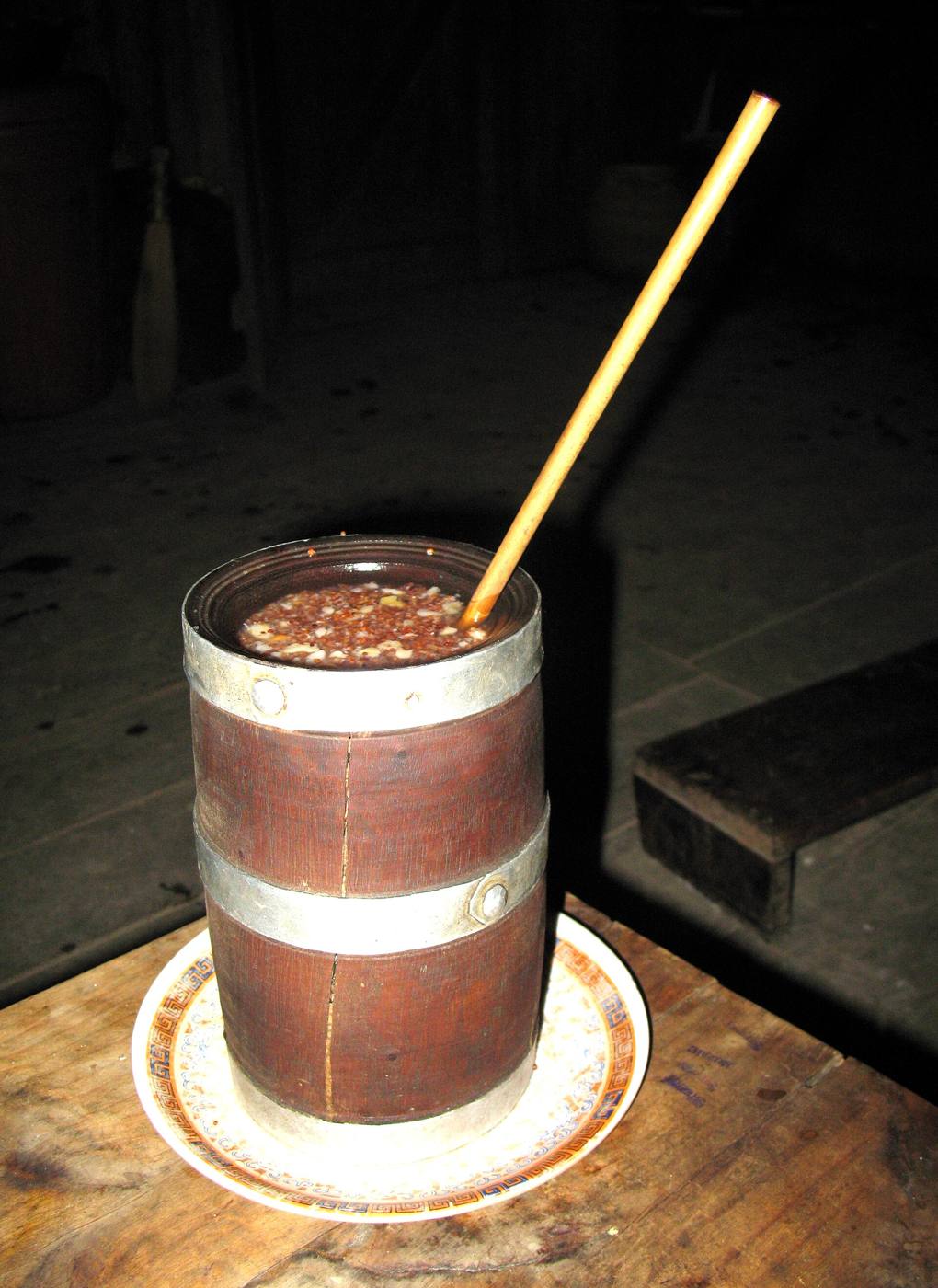
Tongba is a mildly alcoholic drink made from fermented finger millet, known locally as kodo. It is the indigenous drink of the Limbu people, one of the Kirati communities of eastern Nepal, Sikkim and the Darjeeling hills, and it is also widely made and shared by Rai, Sherpa and other hill communities.
Strictly speaking, tongba is the name of the vessel: a cylindrical container, traditionally made from a section of bamboo, sometimes with a lid. The fermented millet inside is known by names such as jaand or jaarn. Hot water is poured over the grain, left to steep for a few minutes, and the warm, slightly sour liquid is sipped through a thin bamboo straw called a pipsing or pipli, its lower end closed and slit so that the grain stays behind. When the cup runs dry, it is simply topped up with more hot water, and a single serving can last an evening.
How it is made
Alcohol content varies with the brew and the number of top-ups; reference sources give roughly 2–5 per cent ABV, but home brews can be stronger.
Making tongba takes patience. Finger millet is cleaned, cooked and cooled, then mixed with marcha, a dried starter cake of mixed yeasts and moulds. The Limbu name for the starter is khesung, and each household's recipe, traditionally kept by women, gives its brew a distinct flavour.
The inoculated millet is spread on a bamboo mat, then packed into baskets lined with leaves and left to begin fermenting for a few days. It is then sealed in an airtight container and matured for weeks or months, depending on the climate and the strength desired. The longer it rests, the stronger and more complex it becomes.
More than a drink
For the Limbu and other Kirati communities, tongba carries real cultural weight. Offering it to a guest is a mark of respect and warmth, and it is shared at weddings, where the couple drink from the same vessel, as well as at religious ceremonies and festivals. It is offered to deities and ancestors during rituals, including the Kirati seasonal festivals of Ubhauli and Udhauli, which mark planting and harvest.
In the cold hill winters it is also simply a warming, sociable drink, passed around a fire while conversation flows. Fermentation scientists have studied millet brews of the Darjeeling and Sikkim hills as part of the region's rich tradition of fermented foods, alongside gundruk and kinema.
Trying tongba in Darjeeling
Tongba has long been brewed at home and shared rather than sold, which is part of its charm. Increasingly, though, visitors are discovering it at small, informal eateries in and around Darjeeling and in village homestays, where hosts may serve it to guests on cold evenings. Ask your homestay host or a local guide where it is currently available; small cafés near the zoo and on the edges of town have served it to visitors in the past.
It is most often enjoyed in winter, from November to February, when a warm drink by the fire is most welcome, though it is made year-round in many households.
How to drink it
- Sip slowly through the bamboo straw; do not try to stir or remove the grain.
- When the liquid runs low, your host will top up the vessel with hot water. Wait a few minutes before sipping again.
- The first refills are the strongest; later ones become progressively milder.
- Pair it with snacks such as roasted soybeans (bhatmas sadeko), pickles or fried meat.
- If you do not drink alcohol, it is fine to decline politely or accept the vessel and take just a token sip.
Responsible tips for visitors
- Tongba feels gentle but can be stronger than it seems, especially home brews and at altitude. Pace yourself.
- Do not drink and drive on hill roads, and arrange transport back to your hotel.
- Sale of home-brewed alcohol is regulated; drink at licensed premises or as a guest in someone's home.
- Avoid alcohol if you are feeling unwell from altitude or cold.
Frequently asked questions
What does tongba taste like?
Mildly sour and yeasty, a little sweet and faintly fruity, served warm. It is closer to a light, cloudy farmhouse beer than to spirits.
Is tongba the same as chhaang?
They are related. Chhaang is a broader name for fermented grain drinks across the Himalaya, made from millet, rice or barley; tongba refers specifically to fermented millet served in the bamboo vessel with hot water.
Where does tongba come from?
It is the traditional drink of the Limbu people of Limbuwan, in present-day eastern Nepal and parts of Sikkim, and is widely drunk in the Darjeeling hills.
When is the best time to try tongba?
Winter evenings, from November to February, when the warm drink is most appreciated, though it is available in some places year-round.
Plan your visit
Food & Drink
Steaming momos, warming thukpa, fiery pickles and the world's most celebrated tea. Darjeeling is a delicious…

Darjeeling's Food Culture: Communities, Festivals and the Art of Fermentation
To understand Darjeeling's food, look beyond the menu: at the communities who cook it, the seasons that shape it and…
What to Eat in Darjeeling: From Momos to Dhido
Darjeeling's kitchen draws on Nepali, Tibetan, Lepcha and Bhutia traditions, with a dash of colonial-era baking. These…
October 2024Culture & People
A Himalayan crossroads where Nepali, Lepcha, Tibetan, Bhutia and colonial influences meet, and where prayer…

Darjeeling in Winter: 10 Reasons to Visit in the Cold Season
Winter in Darjeeling means cold nights, bright blue mornings and some of the clearest Himalayan views of the year. Snow…
October 2024