Riding the Darjeeling Toy Train: What the Journey Is Really Like
Whistles in the mist, a steam engine brushing past shopfronts, and Kangchenjunga appearing over the Batasia Loop: a ride on the Darjeeling Himalayan Railway is the one experience almost every visitor remembers. Here is what to expect, and how to choose the right ride.
A railway that runs through the street
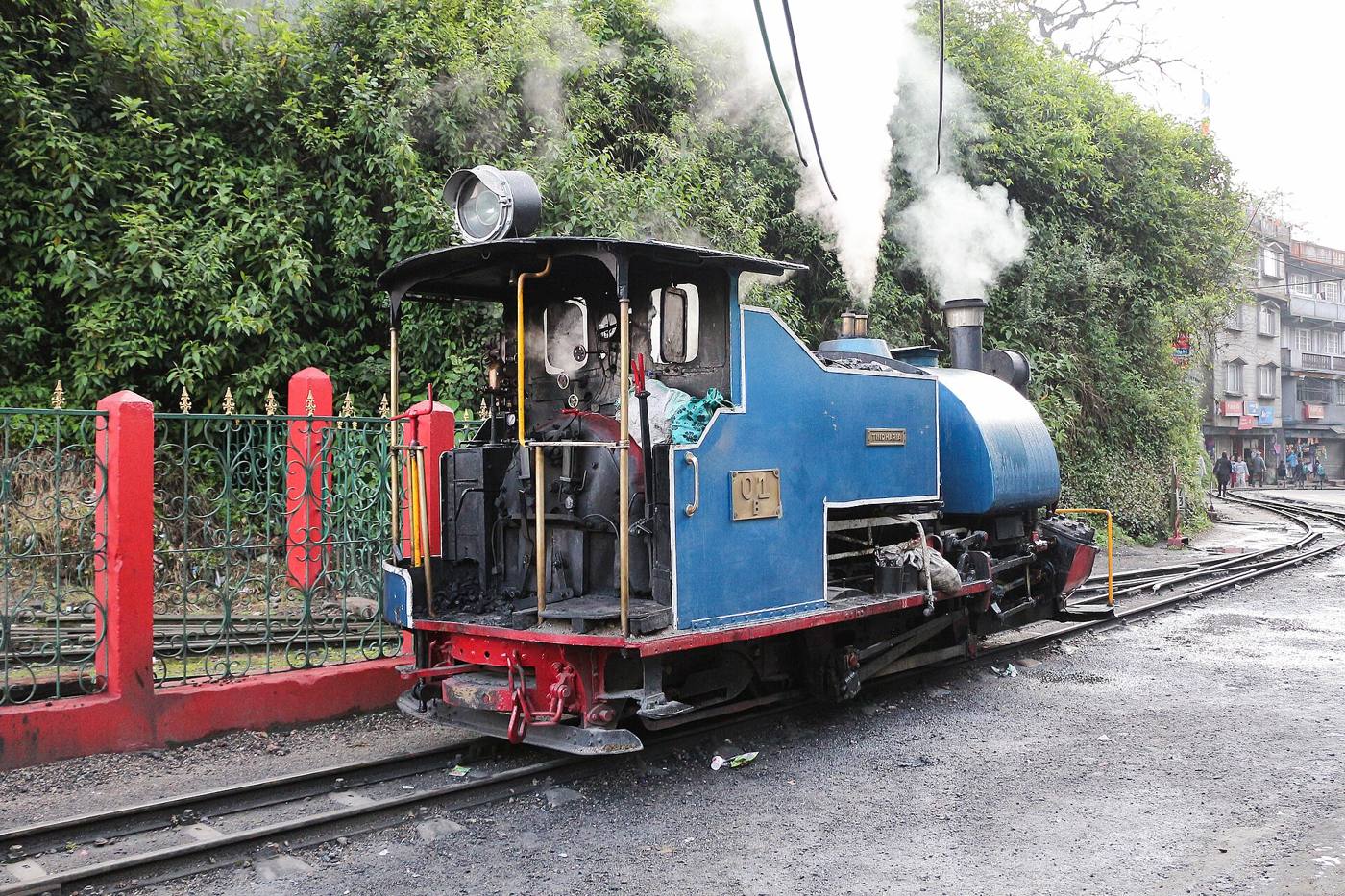
The first surprise is how close it all is. The Darjeeling Himalayan Railway, a two-foot-gauge line opened in 1881 and listed by UNESCO in 1999, runs for much of its length right beside the road, and in places straight down the middle of a bazaar. Shopkeepers lift awnings, children wave from doorways and cars pull over as the little blue train eases past with its horn or whistle sounding.
The pace is gentle, usually not much faster than a brisk cycle ride, which is exactly the point. You have time to look into tea gardens and pine forests, watch the clouds rolling up the valleys, and take photographs without the blur.
The joy ride: Darjeeling to Ghum and back
Most visitors ride the joy ride, a round trip of roughly two hours from Darjeeling station. The train climbs gently out of town along Hill Cart Road, with views back over Darjeeling's rooftops and the valleys below.
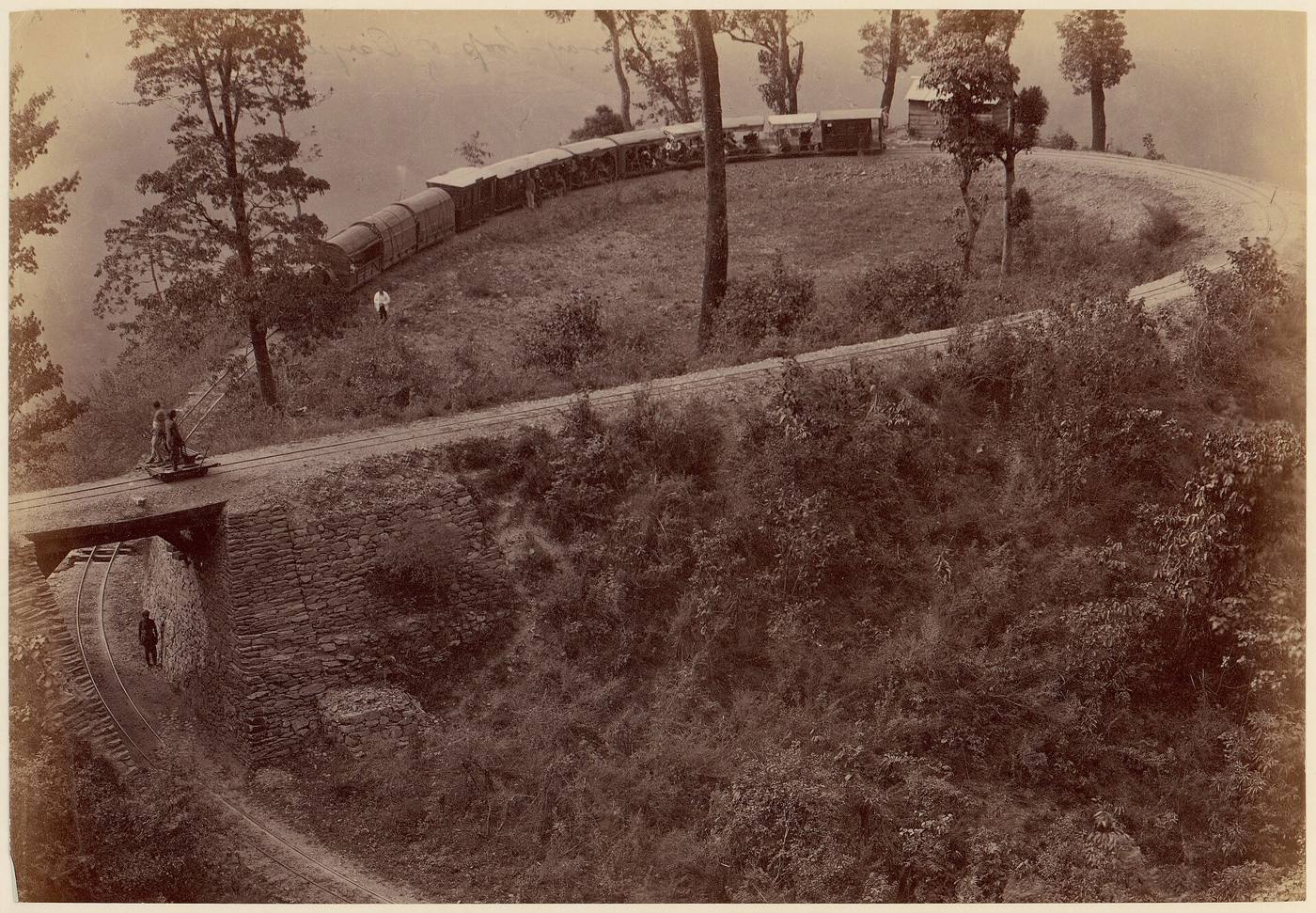
The highlight comes at the Batasia Loop, where the track spirals round a landscaped garden and a memorial to Gorkha soldiers. The train stops for around ten minutes; on a clear morning the whole Kangchenjunga range fills the skyline behind the loop. It then continues to Ghum, at about 2,258 m long billed as the highest station in India, where a longer halt gives you time to visit the railway museum and the vintage engine 'Baby Sivok' before the run back down to Darjeeling.
The full climb from the plains
For railway enthusiasts, the full journey from New Jalpaiguri (NJP), the broad-gauge junction near Siliguri, is the real adventure: about 88 km and a climb of more than 2,000 metres, taking seven hours or more. It is slow, and often delayed, but there is nothing else quite like it.
The first hour is flat, through the outskirts of Siliguri. After Sukna the line starts to climb through sal forest and tea estates, using loops and zig-zag reverses to gain height. Around Tindharia, home of the railway's workshops, the train negotiates Agony Point, the tightest loop on the line, with sheer drops into the valley. Higher up, Kurseong is the railway's headquarters and the natural halfway point; the train runs through its busy market before climbing on through Tung and Sonada, often into the cloud, to Ghum and down the final stretch to Darjeeling.
If seven hours feels like too much, ride just the upper section from Kurseong to Darjeeling (around two and a half to three hours), which takes in the street running, Ghum and the Batasia Loop.
Sights along the way
Batasia Loop
A spiral of track below Ghum, completed in 1919, with a garden, a war memorial and, on clear days, wide views of Kangchenjunga.
Ghum station and museum
The highest point of the railway, with a small museum of old photographs, bells, uniforms and the restored locomotive 'Baby Sivok'. Ghoom Monastery is a short walk away.
Kurseong
The railway's headquarters town, where the train squeezes along the main bazaar. Known for its tea estates and views down to the plains.
Agony Point and Tindharia
Dramatic engineering on the lower hills: a hairpin loop with long views, and the historic workshop where the steam engines are maintained.
Sonada and Tung
Small hill towns where the line runs at the roadside through mist, pine and cryptomeria forest.
Steam or diesel?
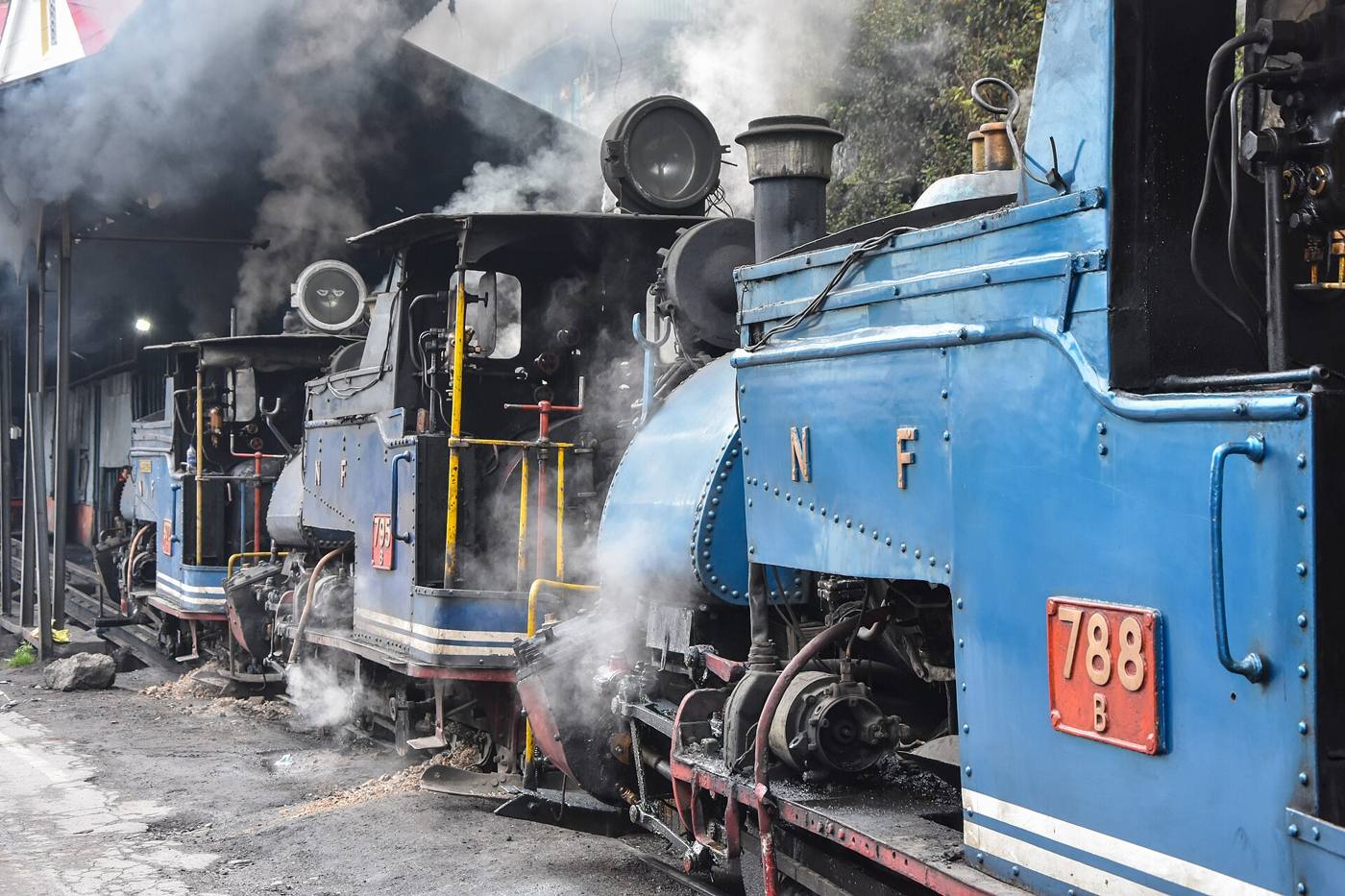
Steam departures and seasonal specials vary from year to year. Check the current timetable before you plan around a particular service.
Both the joy ride and the longer services can be hauled by either kind of locomotive, and the choice changes the experience more than you might expect.
| Steam | Diesel | |
|---|---|---|
| Locomotive | Vintage B-Class engine, many over a century old | Modern diesel locomotive |
| Atmosphere | Smoke, whistle, the crew at work on the footplate | Quieter and cleaner |
| Availability | Fewer departures, sells out first in peak season | More departures, easier at short notice |
| Fare | Higher | Lower |
| Best for | Photographers and heritage lovers | Families and tight schedules |
Booking your ride
Tickets are sold through Indian Railways' official IRCTC website and at Darjeeling station, and peak-season steam rides can sell out weeks ahead. For station codes, train numbers, fares and step-by-step help for international travellers, see our guide to booking Darjeeling Toy Train rides.
Tips for a better ride
- Choose a morning departure: views of Kangchenjunga are usually clearest before the clouds build up around midday.
- On the joy ride, sit on the left-hand side heading out of Darjeeling for the valley views; at Batasia, everyone gets off, so you will not miss the mountains either way.
- Bring a warm layer. Ghum is noticeably colder than Darjeeling, and open windows let in the mountain air.
- Steam engines throw out soot and cinders: wear dark clothes and keep a lens cloth handy.
- Bring water and a snack for longer journeys; there is no catering on board, though vendors appear at some stations.
- During the monsoon (roughly mid-June to mid-September), landslides can suspend services on the lower section, so keep plans flexible.
Frequently asked questions
How long is the Darjeeling Toy Train joy ride?
About two hours for the round trip from Darjeeling to Ghum and back, including a short photo stop at the Batasia Loop and a longer halt at Ghum.
Is the full ride from New Jalpaiguri worth it?
For railway lovers, yes, but it takes seven hours or more and delays are common. Most visitors prefer the joy ride or the shorter Kurseong–Darjeeling section.
Can I see Kangchenjunga from the Toy Train?
On clear days, yes, especially from the Batasia Loop. Mornings from October to December and in spring give the best chances.
Is the steam ride better than the diesel?
Steam is more atmospheric and photogenic, but costs more and has fewer departures. The route and stops are the same.
Is the Toy Train suitable for children and older travellers?
Yes. The pace is slow and the joy ride is short. Coaches are compact, with steps up from the platform, and there are no toilets on board joy-ride coaches.
Plan your visit
How to Book Darjeeling Toy Train Rides
A step-by-step guide to booking the Darjeeling Himalayan Railway joy ride and the full New…

Darjeeling Himalayan Railway (Toy Train)
A UNESCO World Heritage railway that climbs into the clouds

Batasia Loop & War Memorial
A railway spiral with a 360° Himalayan panorama
Ghum Station & DHR Museum
Railway relics at one of the highest stations in India
The Darjeeling Himalayan Railway: A History of the Toy Train
Built in barely two years on a track just two feet wide, the Darjeeling Himalayan Railway turned a days-long trek into…
July 2024
Kurseong
The 'land of the white orchid' and historic tea estates