

Darjeeling in the Monsoon: Mist, Tea Gardens and How to Travel Safely
From June to September, Darjeeling disappears into cloud. The monsoon brings emerald tea gardens, waterfalls and empty streets, along with real risks that every visitor should plan for.
What the monsoon is like
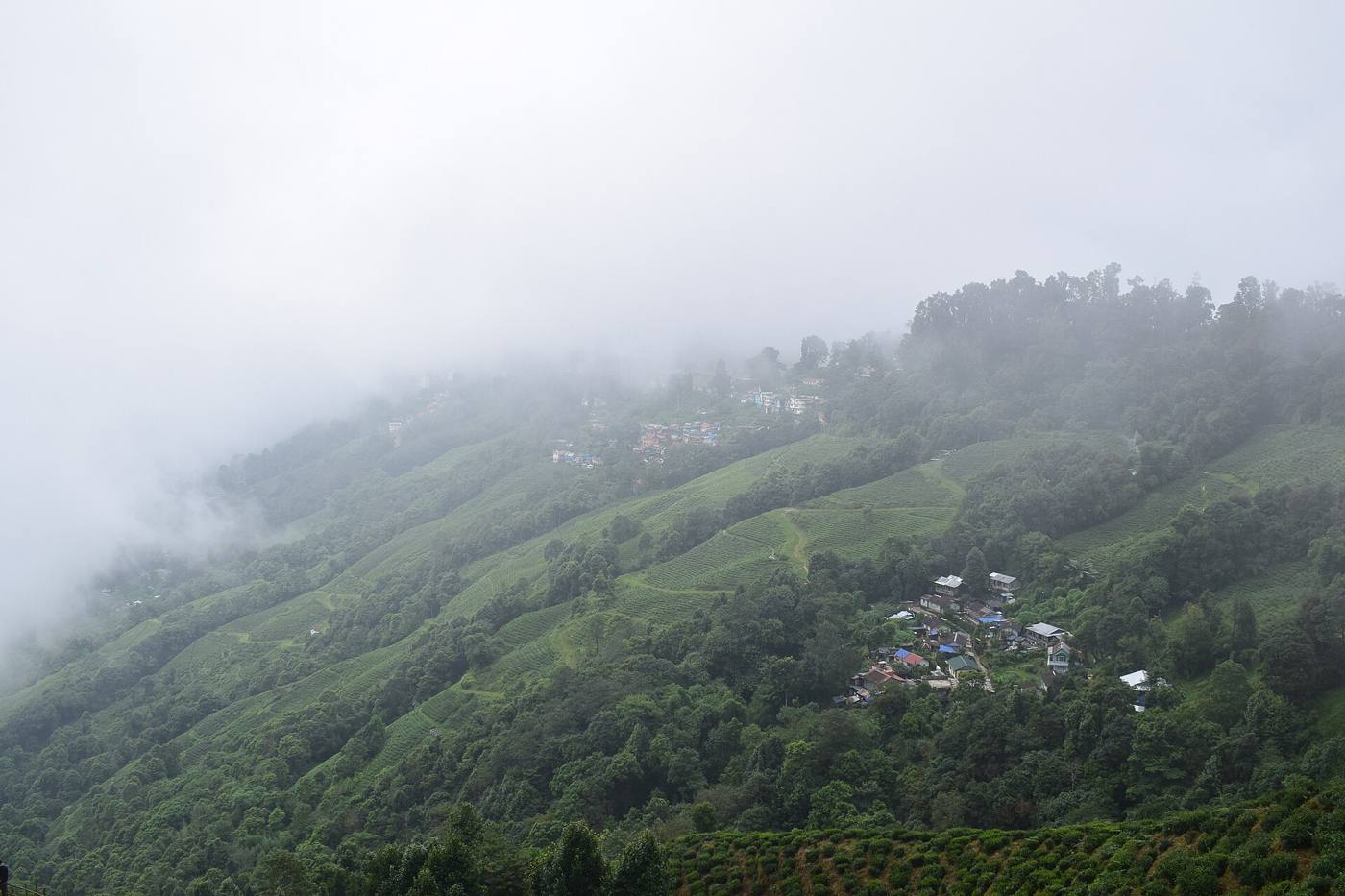
The south-west monsoon usually reaches the Darjeeling hills in June and lingers into September. These four months bring the great majority of the town's annual rainfall: long-term averages show well over 400 mm in June and more than 600 mm in July, with rain on most days. Temperatures stay mild, with days around 20°C and nights around 13°C, but everything feels damp.
Rain is rarely constant from dawn to dusk. Mornings are often calmer, and the clouds sometimes lift for an hour or two, revealing the valleys below. Long, bright spells and views of Kangchenjunga are unusual until the season ends.
Why come in the monsoon
- Tea gardens at their most vivid: the bushes flush green, and pluckers work through the rain on estates such as Happy Valley Tea Estate.
- Mist and atmosphere: clouds drift through the town, the forest around Senchal Lake and the monasteries at Ghum take on a moody beauty.
- Waterfalls and moss: streams and falls along the roads to Kurseong and Mirik are in full flow, and the forests are lush with ferns and orchids.
- Few crowds: outside the early-June school holidays, international and domestic visitor numbers are low.
- Lower prices: many hotels and homestays offer their best rates of the year.
- Cosy days indoors: museums, tea tastings, cafés and long lunches of momos and thukpa suit the weather.
Safety first: landslides and road closures
The Darjeeling hills are steep, young mountains, and heavy rain regularly triggers landslides. These can block roads for hours or days, damage the Toy Train line and, in severe events, cost lives. Visitors should take the risk seriously.
A recent example showed how quickly conditions can change. On the night of 4–5 October 2025, just after the usual end of the monsoon, extreme rainfall caused dozens of landslides across the Darjeeling and Kalimpong hills. Many people died, Sikkim was largely cut off for a time, Rohini Road was closed for repairs, a bridge at Dudhia on the Mirik route collapsed, and tourists were stranded until the main roads reopened. The Geological Survey of India had issued a high-risk landslide alert hours before the rain.
- Check the India Meteorological Department (IMD) forecast and heed any orange or red warnings; postpone road journeys during very heavy rain.
- Do not travel on hill roads at night in the monsoon. Arrive and leave in daylight.
- Leave at least one spare day before an international flight from Bagdogra.
- Follow instructions from police and the district administration, and listen to your driver: local drivers know which stretches are risky.
- Avoid lingering on roadsides beneath steep, wet slopes or near swollen streams.
- Keep your hotel informed of your plans, carry a charged phone and power bank, and save the emergency number 112.
- Consider travel insurance that covers trip disruption.
What may be closed or limited
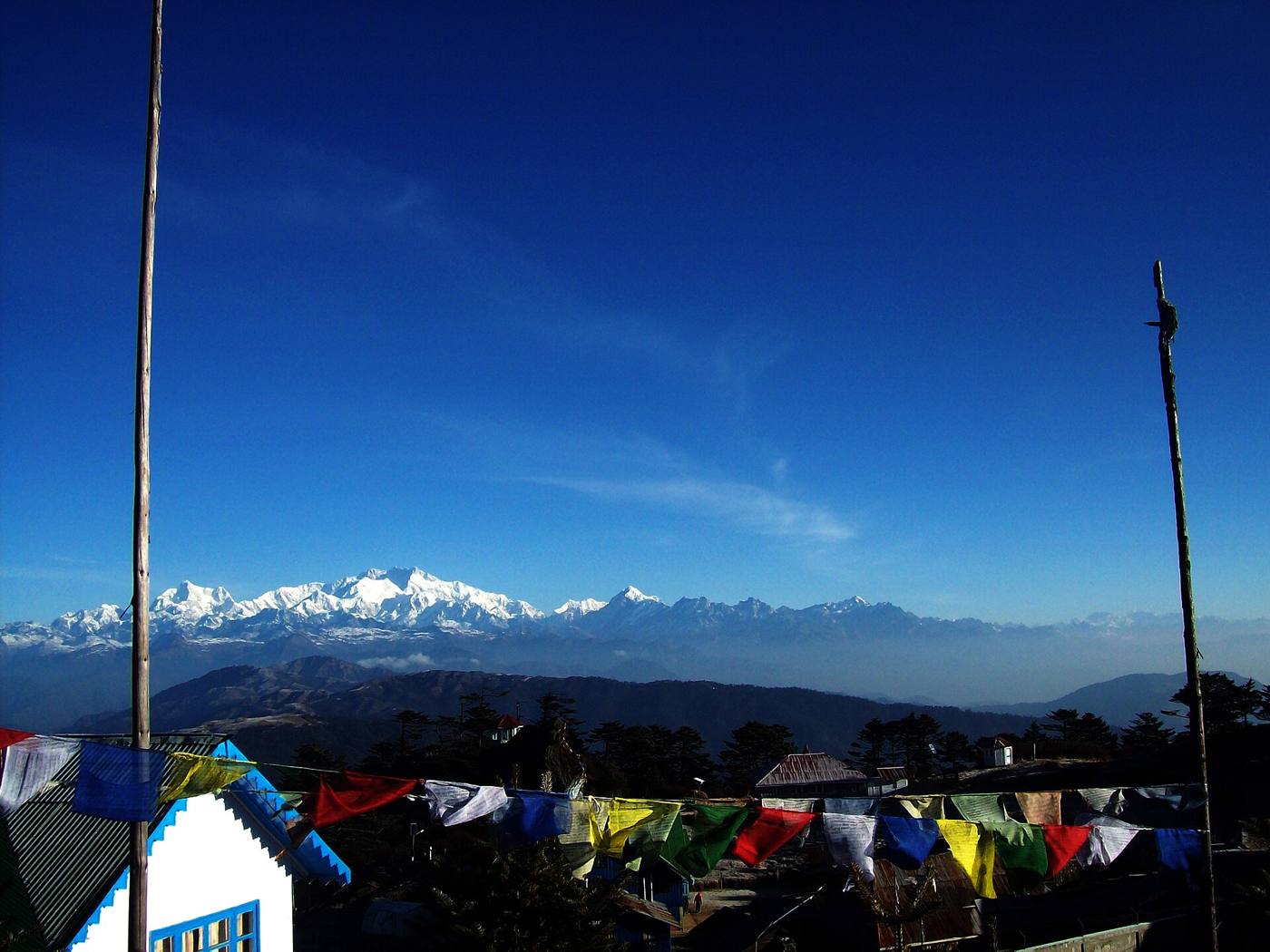
- Singalila National Park, including the trek to Sandakphu, is normally closed to tourists from mid-June to mid-September.
- Toy Train services, particularly on the lower section between New Jalpaiguri and Kurseong, can be suspended after landslides. Joy rides from Darjeeling to Ghum are more likely to run.
- Tiger Hill sunrise trips still operate, but the chance of seeing the sunrise or the mountains is low.
- Some rural homestays and offbeat villages become hard to reach when unpaved roads turn to mud.
Making the most of a monsoon visit
Base yourself in central Darjeeling, close to the Mall and Chowrasta, so that you can walk to cafés, museums and viewpoints between showers. Plan flexible days: if the morning is clear, head straight for Observatory Hill or the Japanese Peace Pagoda; if it is pouring, visit the Himalayan Mountaineering Institute museum, the Bengal Natural History Museum or a tea room on Nehru Road.
The monsoon is a good time to learn about tea. Many estates are busy with the rains flush, and tea shops in town can explain how the season changes the character of the leaf.
What to pack
- A good waterproof jacket and a compact umbrella.
- Quick-drying clothes and a warm layer for cool evenings.
- Waterproof shoes or sandals with grip; paths are slippery.
- Dry bags or zip-lock bags for electronics and documents.
- Insect repellent and long socks if walking through forest, where leeches are common.
Frequently asked questions
Is it safe to visit Darjeeling in the monsoon?
Many people visit without problems, but landslides and road closures are a genuine risk. Travel by day, watch weather warnings, follow local advice and keep your plans flexible.
Can I trek to Sandakphu in the monsoon?
Usually not. Singalila National Park is normally closed to tourists from mid-June to mid-September.
Does the Toy Train run during the monsoon?
Joy rides between Darjeeling and Ghum generally continue, but longer sections can be suspended after landslides. Check before you book.
Will I see Kangchenjunga?
Only rarely. Clear views are much more likely from October to March.
Plan your visit

When to Visit Darjeeling: Seasons, Weather and a Month-by-Month Guide
Darjeeling is a year-round destination, but each season offers something different. Clear Himalayan views, tea…
July 2024Plan Your Trip
Everything international travellers need to know: visas, permits, getting here, getting around, weather…

How to Reach Darjeeling: Flights, Trains, Roads and Border Crossings
Darjeeling has no airport or mainline station of its own. Every journey ends with a long, winding climb from the plains…
Happy Valley Tea Estate
Walk the tea rows and taste a fresh flush in the factory
Darjeeling Tea
The 'Champagne of Teas' grows on some of the steepest slopes on Earth. Walk the gardens, meet the makers and…
Sandakphu & Singalila National Park
See four of the world's five highest peaks from one ridge
More travel planning

15 Things to Do in Darjeeling: A Traveller's Guide
Beyond the famous sunrise, Darjeeling rewards curious travellers with tea, trains, monasteries, mountain food and walks…
August 2025
Darjeeling in Winter: 10 Reasons to Visit in the Cold Season
Winter in Darjeeling means cold nights, bright blue mornings and some of the clearest Himalayan views of the year. Snow…
October 2024
Darjeeling's Top 5 Must-See Attractions
Short on time? These five classics capture the essence of Darjeeling: Himalayan sunrise, a world-heritage railway…
July 2024